New Orleans
Interview with the VampireNew Orleans is the decisive setting of Louis’s life as a vampire and the place that most completely joins his mortal past to his supernatural present. First encountered through the plantations along the Mississippi, it becomes a city where cultural mixture and social hierarchy make a vampire’s presence almost invisible, then a landscape of guilt, murder, escape, and return. Even after years abroad, Louis recognizes New Orleans as home, finding in its familiar streets and surviving houses the emotional residue of Lestat, Claudia, Pointe du Lac, and the life he thought he had left behind.
Colonial Origins and Social Texture
New Orleans enters Louis’s story as the city nearest his family’s two indigo plantations in Louisiana, established after the family received a land grant. The plantations stood on the Mississippi, and the life around them was described as both luxurious and primitive. Imported furniture, a rosewood interior, and a harpsichord existed beside swamps, moss-hung cypresses, wisteria, birds, and the untamed sounds of the landscape. This combination gives New Orleans its first defining tension: refinement is not separate from wilderness but maintained against it and continually threatened by it.
The city’s population is presented as unusually heterogeneous. French and Spanish residents formed part of its aristocracy; Irish and German immigrants later joined them; enslaved people retained distinct tribal dress and manners; free people of color formed a notable community of craftsmen, artists, poets, and women renowned for their beauty; and Indigenous people sold herbs and handmade goods along the levee. Sailors arrived through the port in great numbers, spending money in cabarets, purchasing companionship, eating Spanish and French food, and drinking imported wines. Planters came in shining landaus with their families to buy gowns, silver, and jewels and to attend the opera and the cathedral. New Orleans therefore appears not as a uniform society but as a dense circulation of languages, colors, classes, labor, commerce, and desire.
A City Made for Vampire Secrecy
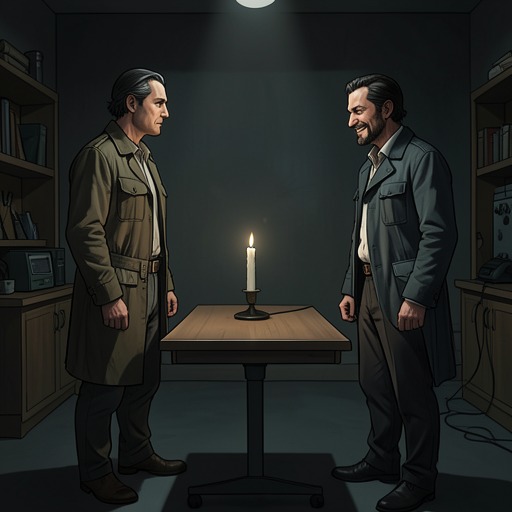
New Orleans offers Louis and Lestat an exceptional environment in which to move among mortals without attracting sustained attention. The city contains French and Spanish quarters, American mansions, narrow streets, dark bars, hotels, cabarets, the riverfront, and crowds accustomed to strangers and spectacle. A richly dressed, pale, graceful figure can pass through pools of gaslight as one more exotic presence among sailors, immigrants, planters, and nocturnal wanderers. If someone notices that a man is unnaturally pale or moves in an uncanny way, the vampire can disappear into an alley before suspicion becomes knowledge.
The city also supplies the practical infrastructure of vampire life. Lestat knows how to obtain money from the extravagantly dressed and from wealthy young planters at gambling tables, while Louis invests money and manages property. Their ability to acquire cash, shelter, clothing, and financial arrangements depends on the city’s commercial abundance and social fluidity. New Orleans is thus not merely a picturesque backdrop for vampirism: its port, wealth, hotels, private rooms, servants, carriages, and layered night life make an immortal existence materially possible.
Plantations, Death, and Religious Memory
New Orleans is inseparable from the surrounding plantations and from the violence that binds domestic wealth to supernatural secrecy. After Paul’s death, Louis leased Pointe du Lac to an agency and moved his mother and sister into a town house in the city, hoping to escape the plantation and its oratory. Instead, the city became the place where his guilt followed him. Paul was buried in the St. Louis Cemetery, and Louis avoided its gates while imagining his brother’s body rotting underground. Reports that Paul’s ghost appeared on the plantation spread among the enslaved people, while social acquaintances questioned Louis’s sister about the incident and intensified the family’s distress.
The city also becomes the setting for the chain of events that forces Louis fully into vampire existence. After Lestat’s father dies, Louis kills Daniel, a man whose discovery of the haunted plantation threatens to produce panic among the enslaved people. Later, fleeing Pointe du Lac after the house burns, Louis and Lestat reach New Orleans in an exhausted carriage. Lestat compels an old man to obtain a hotel suite and then kills him after using his influence and money. In the hotel, as dawn approaches, Louis lies in despair while Lestat orders him to kill and goes onto the roof. New Orleans is consequently both refuge and trap: it offers concealment, but it also becomes the urban continuation of the violence begun on the plantations.
Religious spaces preserve another layer of Louis’s connection to the city. At the cathedral, he recalls bringing Paul there for his final service and later enters the building in a state of spiritual crisis. The open doors, candles, altar, organ, confessionals, and memory of the funeral bring his mortal history into the present. When he confronts a priest and demands an explanation for a God who permits a vampire to exist, the cathedral becomes a place where theological doubt turns into physical violence. New Orleans’s Catholic architecture does not resolve Louis’s questions; it concentrates them.
Exile and the Measure of Return
Louis’s departure from New Orleans is shaped partly by Claudia’s desire to find vampires who can explain their origins. Their journey carries them through Europe and toward the Black Sea, the Carpathians, and Eastern Europe, where they discover mindless revenants rather than the intelligent supernatural community they seek. The contrast between these places and New Orleans clarifies the city’s special status. In Eastern Europe, vampire legends are attached to rotting corpses, grave dirt, and peasant knowledge; in New Orleans, vampirism has been absorbed into an urban society sufficiently varied and modern to conceal an immortal among the living.
Paris briefly replaces New Orleans as Louis’s imagined center of beauty and culture, but the comparison remains explicit. Paris appears whole, historical, and nearly indestructible, whereas New Orleans is beautiful yet fragile, threatened by hurricanes, floods, fevers, plague, damp, and the wilderness surrounding it. The city seems like a dream held together by collective human persistence. That fragility is not presented simply as a defect. It is the condition that gives New Orleans its intensity, making its elegance feel precarious and its survival emotionally meaningful.
Homecoming and the Haunted City
After the destruction of Claudia and Madeleine and the burning of the Théâtre des Vampires, Louis leaves Paris with Armand. He travels through Egypt and later lives in New York, repeatedly postponing a return to New Orleans. Armand eventually reveals that Lestat survived the theater fire and traveled toward New Orleans with the help of two vampires. The disclosure changes Louis’s direction: the city is no longer only a place of buried memory but also the possible location of the companion he believed lost.
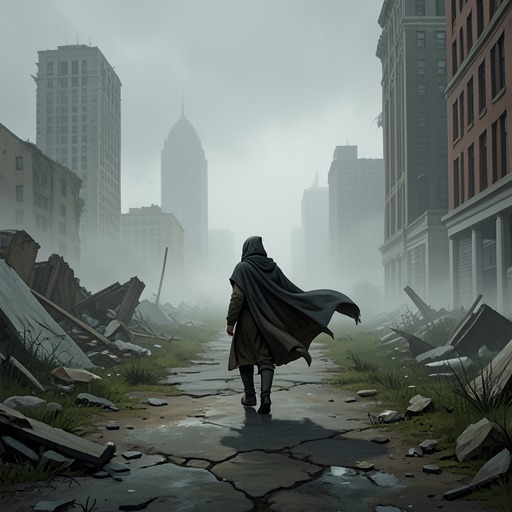
When Louis finally returns, he recognizes the city through sensation and continuity. The air feels distinctive, the flat pavements and familiar oaks restore an extraordinary ease, and the night sounds seem vibrantly alive. New Orleans has changed, but Louis is grateful for what remains. In the Garden District, formerly the Faubourg Ste.-Marie, he finds old mansions beneath magnolia trees; he remembers the Vieux Carré and the wilderness of Pointe du Lac, with honeysuckle, roses, and Corinthian columns against the stars. The city becomes a citadel of grace assembled from surviving fragments rather than an untouched relic.
On Rue Royale, Louis discovers the town house where he, Lestat, and Claudia once lived. Its facade has changed little, its French windows still open over the shop below, and electric chandeliers illuminate wallpaper that recalls the earlier household. He senses Lestat there more strongly than Claudia, despite Lestat’s physical absence. The recognition does not produce simple happiness. After Armand leaves, Louis feels a sadness that is neither painful nor passionate but rich, almost sweet, and connected to jasmine, roses, the courtyard, and the city itself. New Orleans holds him through this sadness, turning memory into a form of attachment.
Narrative and Gothic Significance
New Orleans functions as a geographical archive in which several forms of history occupy the same space. Plantation wealth, slavery, Catholic ritual, immigration, port commerce, racial and cultural mixture, American expansion, and vampire secrecy overlap rather than appearing as separate worlds. The city’s streets and buildings preserve the material traces of Louis’s mortal identity even as they accommodate his predatory afterlife. Its social complexity allows the supernatural to hide in plain sight, while its churches and cemeteries continually return him to questions of death, guilt, and judgment.
The city also gives the narrative its emotional structure. Louis leaves New Orleans in the hope that distance will clarify vampirism and lessen his grief, yet the European quest produces only despair and the discovery of mindless dead. His eventual return does not restore the past, but it makes the past newly legible: Paul’s death, Lestat’s domination, Claudia’s disappearance, the old house, and the beauty of the city become parts of a single haunted geography. New Orleans is therefore not merely where Louis began and ended a phase of his life. It is the place that teaches him that immortality cannot sever a person from history; it only leaves him enough time to revisit every street, room, grave, and surviving image.